
留言
如果您对我们的产品感兴趣并想了解更多详细信息,请在此处留言,我们会尽快回复您。

For chemical traders and manufacturers alike, winter presents a recurring operational challenge that few supply chain plans fully anticipate. When ambient temperatures drop, many Surfactantproducts—particularly Ethoxylate derivatives—undergo significant physical changes that can disrupt entire logistics networks. The viscosity of most liquids, including ethoxylate formulations, is inversely proportional to temperature: as temperatures fall, viscosity rises, sometimes dramatically.
At temperatures below 10°C, ethoxylated fatty alcohol derivatives can exhibit increased viscosity or even partial crystallization. In severe cases, products may solidify or become too viscous to handle, making pumping and offloading nearly impossible. For a trading company like Bewellchem, ensuring that Bulk AEO supply reaches customers in a usable condition is not just a matter of quality—it is a matter of trust.
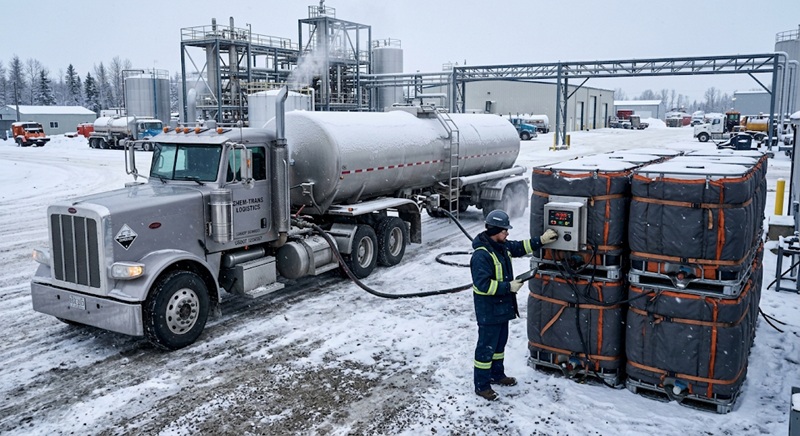
Ethoxylates, including alcohol ethoxylates (AEO) and their various derivatives, are widely used as non-ionic surfactants in industries ranging from home and personal care to agrochemicals, textiles, and lubricants. Their performance depends on maintaining specific physical properties, including proper viscosity and homogeneity.
The vulnerability lies in their molecular structure. Many ethoxylates contain components that tend to crystallize at lower temperatures. When exposed to prolonged cold during ocean freight or overland transport, the material may become turbid, viscous, congeal, or even separate into distinct phases. This does not necessarily indicate degradation, but it does severely impact pumpability and immediate usability upon arrival.
For Bulk AEO supply specifically, the stakes are high. Customers relying on just-in-time production schedules cannot afford to receive cargo that requires days of reheating before it can be processed.
The most reliable solution to winter viscosity challenges lies in proper thermal management throughout the logistics chain. Heating ISO tanks have emerged as the industry standard for maintaining chemical fluidity during cold-weather transport.
ISO tank containers can be equipped with various heating systems: steam coils, hot water circulation, or electric heating elements. Steam heating is particularly common, with many T11 ISO tanks featuring stainless steel steam heating coils designed to maintain temperatures even in extreme conditions. Insulated and temperature-controlled options are also available to suit different chemical requirements.
However, heating must be applied carefully. Engineering protocols typically specify a gradual thermal recovery rate—generally not exceeding 5°C per hour—to ensure uniform viscosity reduction without compromising chemical stability. Direct steam should be avoided to prevent localized overheating. The minimum offloading temperature should generally be maintained above 10°C to ensure optimal flow rates.
At Bewellchem, we recommend the following protocols for managing Ethoxylate handling during cold months:
Pre-heat before unloading: If material has been exposed to temperatures below 5°C, allow a controlled warming period before transferring to storage tanks.
Use heated staging areas: For IBC containers and drums, pre-stage in a heated area (15–25°C) for at least 48 hours before use.
Specify heating requirements upfront: When arranging Chemical logistics for winter shipments, clearly communicate temperature requirements to carriers and ensure appropriate heating equipment is available upon arrival.
Plan for delays: Allocate a 5- to 7-day logistics buffer within bulk orders to accommodate weather-related transit delays.
Restore if needed: If product becomes viscous or cloudy due to cold exposure, gentle heating to 30–40°C with mixing will typically restore it for use.
As a dedicated chemical raw material trading company, Bewellchem understands that Chemical logistics is not simply about moving goods from point A to point B. It is about understanding the physical behavior of the products we trade and ensuring they arrive in the condition our customers expect.
Our expertise in Surfactant and Ethoxylate products, combined with our commitment to proactive supply chain management, means we anticipate challenges before they become problems. Whether you are ordering Bulk AEO supply for textile applications or specialty ethoxylates for personal care formulations, we work with you to plan for seasonal variables and ensure seamless delivery.
Q: Why does ethoxylate viscosity increase in cold weather?
A: The viscosity of most liquids, including ethoxylate formulations, increases as temperature decreases because molecular kinetic energy drops, increasing resistance to flow. Additionally, certain components within ethoxylates tend to crystallize at lower temperatures, further thickening the material.
Q: What temperature causes ethoxylates to become problematic?
A: Problems typically begin when ambient temperatures drop below 10°C. Significant viscosity shifts and crystallization risks increase as temperatures approach 5°C or lower.
Q: How can I restore ethoxylates that have thickened in cold weather?
A: Gentle heating to 30–40°C with mixing will typically restore the product to its original usable condition. Heating should be gradual—not exceeding 5°C per hour—to prevent thermal stress or degradation.
Q: Are heating ISO tanks necessary for all winter shipments?
A: Not necessarily for all shipments, but they are highly recommended for bulk loads traveling through regions where temperatures regularly drop below 10°C. Insulated containers may suffice for milder conditions, while active heating is essential for extreme cold.
Q: How far in advance should I plan winter chemical shipments?
A: We recommend booking 2–3 weeks in advance during winter months and allocating a 5- to 7-day logistics buffer for weather-related delays. Early communication with your supplier about temperature requirements is essential.


留言
扫描关注微信 :

扫描至 WhatsApp :


 支持 IPv6 网络